
IMPACT
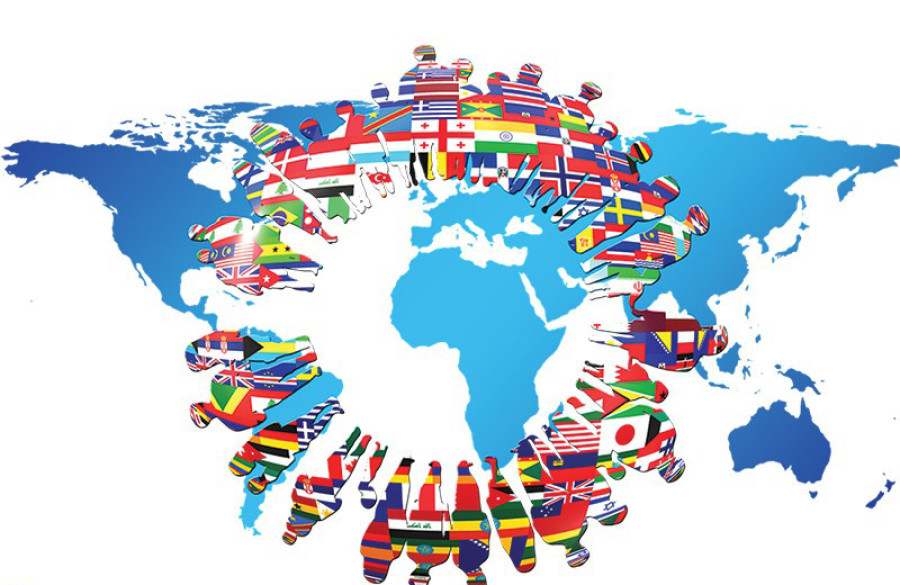
Why Culture Is Africa's Most Underrated Diplomatic Asset
... and What WOW AFRICA Is Doing About It
Every year, governments spend enormous sums trying to convince the world that their country is worth visiting, investing in, or partnering with. Trade missions are launched, glossy investment brochures are printed, and delegations circle the globe pitching numbers — GDP growth, ease-of-doing-business rankings, tax incentives. And yet, so often, none of it moves the needle the way a single unforgettable cultural moment can.
That’s the premise WOW AFRICA is built on: people rarely invest in, visit, or partner with places they do not understand — and culture is what creates that understanding.
The logic behind the model
WOW AFRICA describes its work as following a simple but powerful sequence:
Culture → Relationships → Trust → Reputation → Opportunity.
It’s a logic that’s easy to underestimate precisely because it sounds soft next to spreadsheets and policy papers. But look closely at how nations actually build influence, and culture is almost always doing the quiet work underneath the headline deals. A country doesn’t become a tourism magnet because of an infrastructure report — it becomes one because a piece of music, a dish, a festival, or a story lodged itself in someone’s imagination long before they booked a flight. Investors don’t wire money to places that feel abstract and unfamiliar; they commit to places where they’ve met people, understood values, and built trust.
WOW AFRICA’s bet is that if you deliberately engineer the cultural touchpoint — rather than leaving it to chance — you can compress the distance between “unfamiliar African nation” and “trusted partner.”
Five services, one throughline: trust infrastructure
What makes WOW AFRICA’s approach interesting isn’t any single service in isolation — it’s how each one reinforces the others, forming something closer to trust infrastructure than a marketing calendar.
- Cultural Showcases — music, dance, fashion, food, and heritage events — do the emotional heavy lifting. They’re the entry point: the moment a foreign audience first feels something about a place, rather than just reading a fact about it.
- Cultural Exchange Programmes turn that emotional spark into a relationship, connecting institutions, artists, students, and professionals directly with their counterparts abroad — the kind of person-to-person tie that outlasts any single event.
- Creative Industry Promotion gives African film, music, literature, design, and visual art a route to international audiences and markets, treating creativity itself as an exportable, monetizable asset rather than a soft add-on to “real” economic sectors.
- Public Diplomacy Events bring governments, cultural leaders, businesses, and civil society into the same room, converting goodwill into actual dialogue between the people who can act on it.
- Diaspora Engagement may be the most strategically underrated of the five: it recognizes that diaspora communities are already fluent translators between their country of origin and their country of residence, and mobilizes them as ambassadors rather than treating them as a demographic to be marketed to.
Individually, each service produces a moment. Together, they produce a pathway — from a stranger’s first encounter with a culture, through relationship-building, all the way to tourism bookings, trade conversations, and investment decisions.
Why this matters more than it might seem to
It’s tempting to file cultural diplomacy under “nice to have” — a pleasant accompaniment to the real business of trade and investment. But the WOW AFRICA model implicitly makes a sharper argument: in a world where African nations are frequently reduced to a handful of flattened media narratives, reputation is not a side effect of opportunity — it is a precondition for it.
Consider how few global north audiences and investors have had a direct, textured cultural experience of the majority of African nations, versus how many carry secondhand impressions shaped by news cycles, stock imagery, or decades-old stereotypes. Closing that gap isn’t a branding exercise; it’s groundwork. A country that has never appeared in someone’s imagination — through its music, its designers, its films, its festivals — has to work far harder to be trusted with their capital, their tourism spend, or their institutional partnership.
This is where the choice of leadership at WOW AFRICA is telling: the team blends legal, diplomatic, creative-industry, and commercial-strategy backgrounds — people who have worked inside government policy, entertainment law, cross-border project management, and business development. That combination suggests an organization trying to operate at the actual intersection where culture turns into policy and policy turns into deals, rather than treating cultural programming and commercial outcomes as separate departments that occasionally wave at each other.
The bigger picture
What WOW AFRICA is really proposing is a rebalancing of how African nations engage the Global North: leading with culture and human connection first, and letting trade, tourism, and investment conversations follow naturally from the trust that’s been built — rather than trying to sell opportunity to audiences who don’t yet feel any connection to the place at all.
It’s a slower, more patient theory of influence than a single high-profile trade summit. But it may also be a more durable one. Relationships built on genuine cultural understanding tend to survive a change in government, a market downturn, or a single bad news cycle in a way that transactional partnerships often don’t.
If the goal is for African nations to be understood on their own terms — not as a monolith, not as a risk category, but as distinct, rich, and dynamic cultures with something specific to offer the world — then platforms like WOW AFRICA aren’t a nice cultural footnote to the “real” diplomacy and economics. They may be the foundation the rest of it has to be built on.